
Custom product prototyping
From concept to a tangible solution: precision, testing and technical development.
At Órbita, we turn ideas into physical prototypes through structural engineering, model making and advanced 3D printing. We transform complex concepts into functional models ready for user, technical and market validation.
We assess the project requirements, from material strength in structural displays to mechanical tolerances for 3D-printed components. We select the appropriate prototyping method for an efficient and functional development process.
We produce technical drawings and CAD files, develop the product architecture and validate joints, assemblies and complex volumes before manufacturing.
We manufacture the physical model with appropriate finishes and mechanical performance, delivering a prototype ready for user testing, technical validation or preparation for production.
Custom product prototyping with an international perspective
Órbita combines technical expertise and strategic design thinking across Argentina, Spain and Mexico to create and validate physical models. Our international perspective helps us understand different industrial standards, supply chains and market requirements.
We use detailed engineering and agile manufacturing methods to turn complex concepts into tangible objects. From structural cardboard engineering for retail to high-precision 3D printing, every prototype is designed with the next production stage in mind.
Technical briefing
We analyse functional requirements, use conditions and brand objectives to define a clear technical basis for the prototype.

Feasibility analysis
We evaluate materials and manufacturing processes to confirm technical and economic viability.
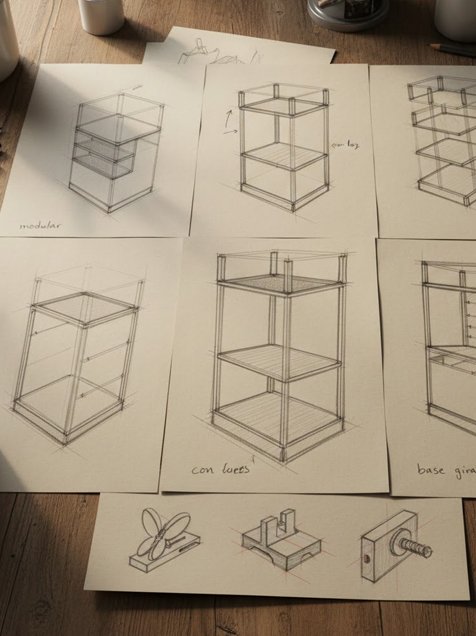
Ideation and sketching
We explore alternatives through sketches and early 3D studies, prioritising ergonomics, function and structural efficiency.
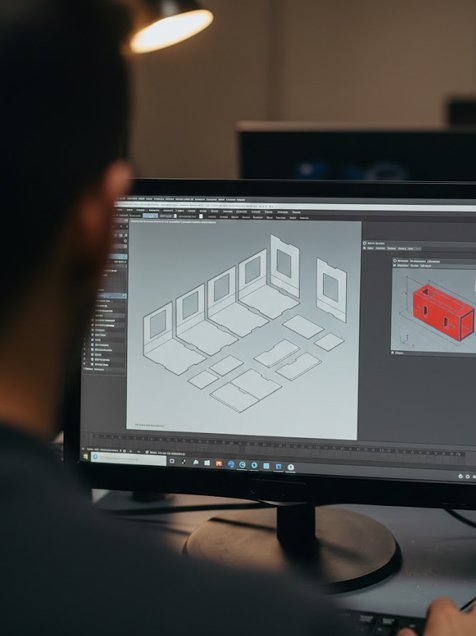
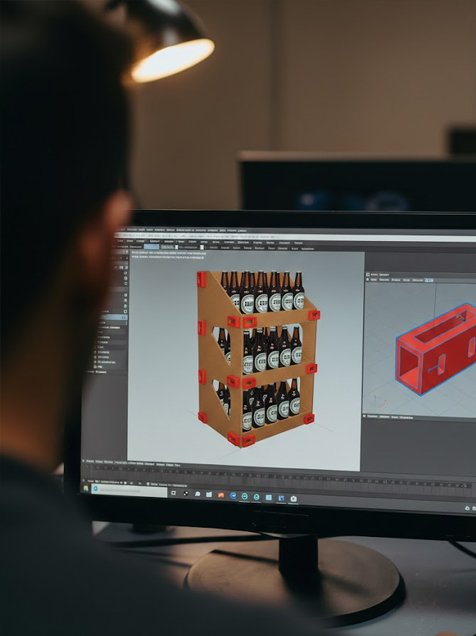
Digital CAD modelling
We convert the selected concept into accurate digital models, defining tolerances, joints and technical interfaces.
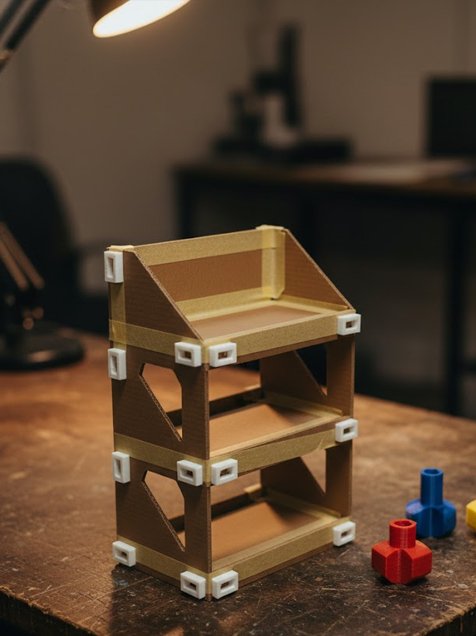
Volume and proportion testing
We build low-fidelity study models to validate dimensions, proportions, ergonomics and initial visual impact.
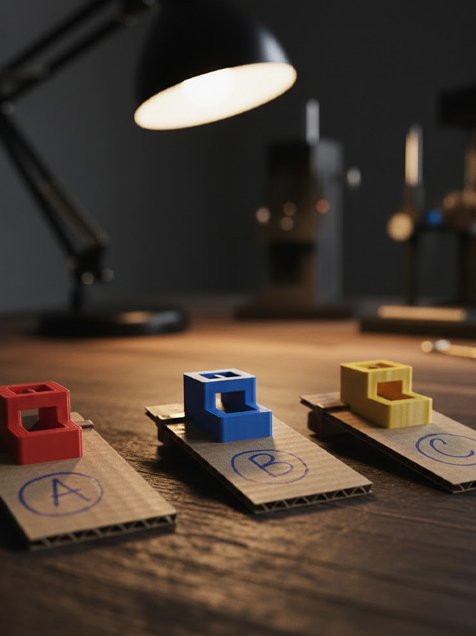
Refinement and detailing
We refine mechanical and graphic components and prepare files for laser cutting, 3D printing or industrial die-cutting.
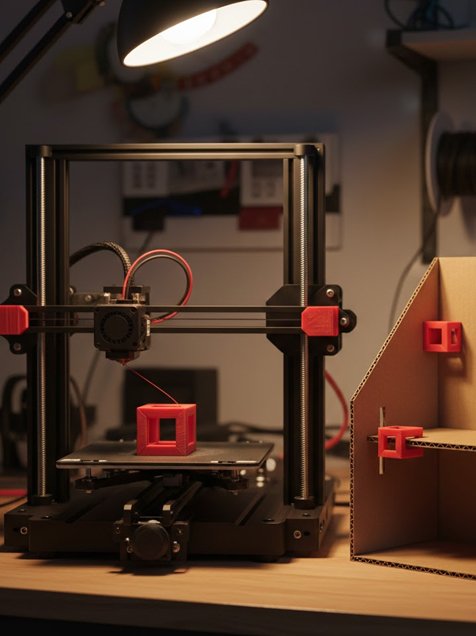
Functional prototype
We manufacture a functional version to test usability, assemblies and mechanical interfaces under realistic conditions.
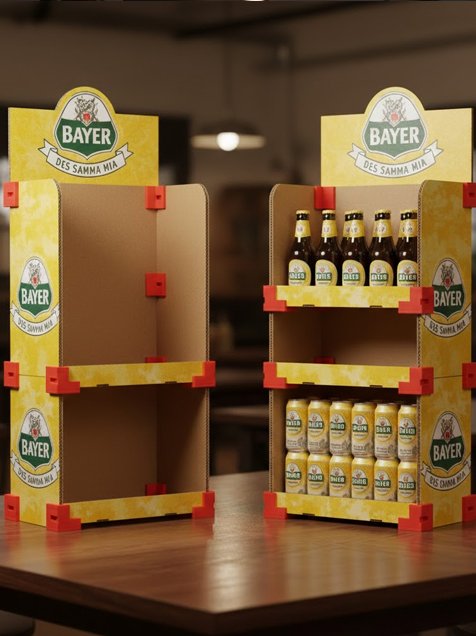
Validation
We test the prototype against the agreed requirements and document any necessary adjustments.
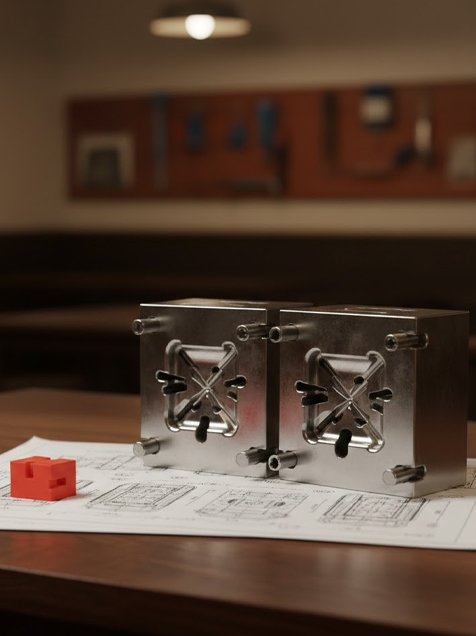
Technical documentation
We prepare final technical files and specifications for pilot or serial production.
Custom product prototyping capabilities
Órbita develops physical solutions through a systematic, scalable approach. Our work ranges from structural packaging and retail displays to technical components produced with 3D printing. Each prototype is built to validate function, strength, assembly and industrial feasibility.
Who benefits from custom product prototyping?
We work with industrial companies, consumer brands, agencies and design teams that use physical prototypes to reduce uncertainty and make better decisions before production.
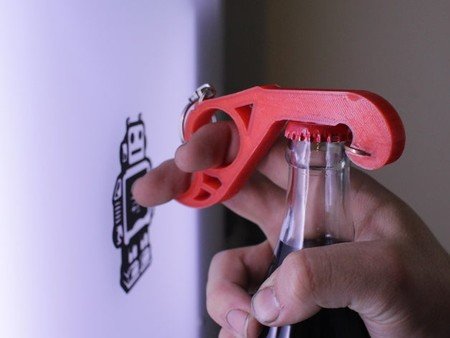
Entrepreneurs and startups
Validate new products with 3D prints and physical models for testing, presentations and investor discussions.
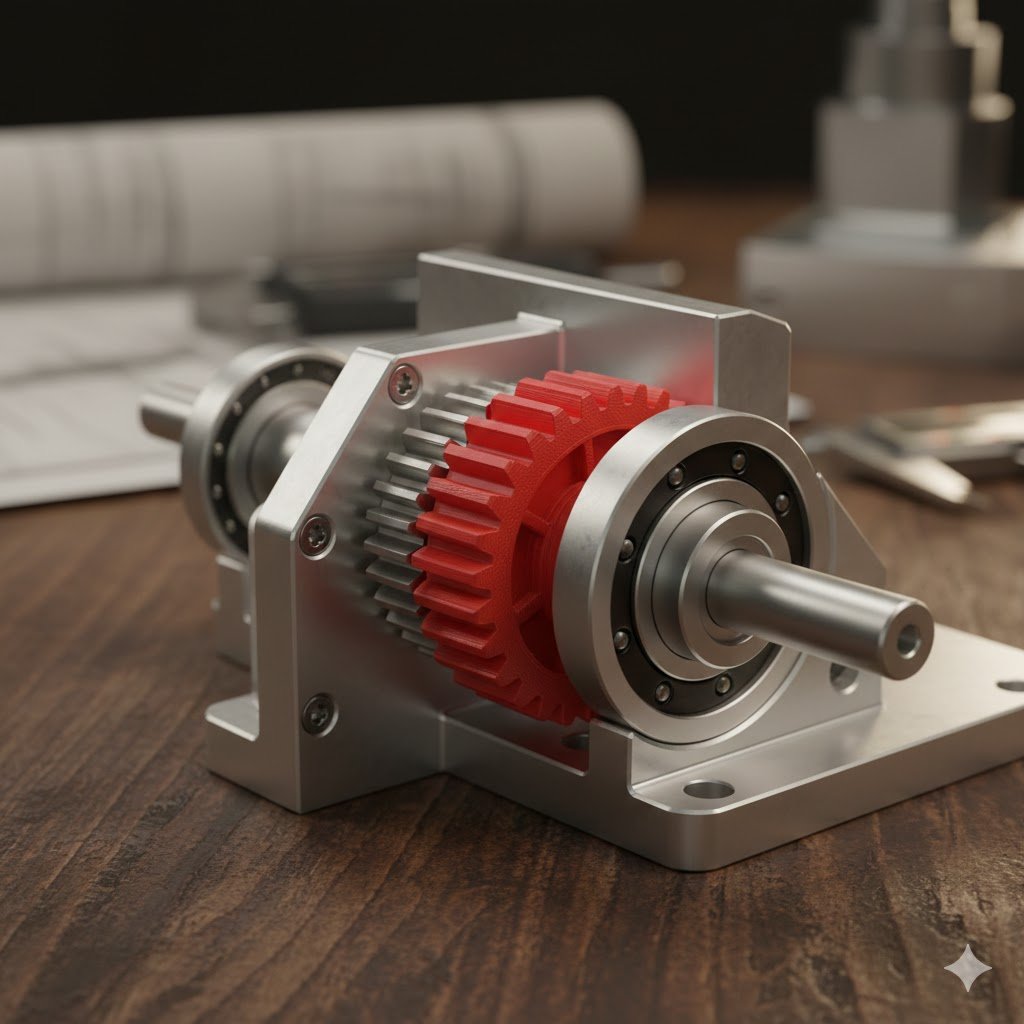
Industry and manufacturing
Test assemblies, technical components and replacement parts before committing to tooling or serial production.
Trade marketing agencies
Validate cardboard displays and retail structures for stability, access, graphic application and visual impact before a large production run.
Advertising agencies
Use high-fidelity prototypes to validate promotional objects, finishes and functionality before campaign production.
Why choose Órbita for product prototyping
Ready to turn your product into a testable prototype?
Tell us what you need to validate. We can develop a physical model that is functional, testable and prepared for the next manufacturing decision.
What a prototype should actually prove
A prototype is not a guarantee of feasibility or a product automatically ready to manufacture. It is a learning tool built to answer specific questions with an appropriate level of fidelity.
Visual and volumetric prototypes
These models evaluate proportion, form, volume, colour or finish. They may use different materials and processes, so they do not demonstrate mechanical behaviour or production capability.
Functional and mechanism prototypes
Functional prototypes focus on use, interfaces, ergonomics, mechanisms, preliminary resistance or assembly. Their validity depends on the variables tested and how closely geometry, material and process represent the intended solution.
Test, observation and iteration
Before building, we define hypothesis, users, conditions, variables and acceptance criteria. During testing we record results, failures and observations; afterwards we decide what should change.
Limits and documentation
A visual model may not represent loads, and a 3D-printed part may behave differently from an injected component. We document version, objective, materials, conditions and decisions.
If the alternative is unclear, start with a feasibility study. After testing, use design for manufacturing to prepare supplier-ready information.
Choosing the right prototype
The appropriate prototype is defined by the question it must answer. A visual model can assess proportion and appearance; a volumetric mock-up can test reach and ergonomics; a functional prototype can explore mechanisms, assembly or material behaviour.
Test plan before fabrication
Before building, we define the hypothesis, test condition, observation method and decision threshold. This prevents a highly finished model from being mistaken for evidence about aspects it was never designed to validate.
Iterations and records
Dimensions, components, failures, observations and changes are documented between iterations. The record helps the team understand why a decision changed and what still requires evaluation.
Limits of a prototype
A prototype may use substitute materials or processes. Its performance cannot automatically be extrapolated to tooling, certification or serial production. Those limits are identified in the test report.
Prototype FAQ
Do all prototypes need to be functional?
No. Fidelity should match the uncertainty being tested.
Does a prototype guarantee feasibility?
No. It provides evidence for defined questions; feasibility also depends on scale, suppliers, investment, regulations and logistics.