EDUCATIONAL CASE · METHODOLOGICAL EXAMPLE
CNC Modular Furniture for a Small Workspace
This example explains how a compact furniture system can be studied before manufacturing. It is not a client project and does not claim real commercial results; its purpose is to show feasibility, prototyping and design-for-manufacturing decisions.
The problem
A workstation must combine surface, storage and organisation within a limited area. It must move through domestic access points, assemble with common tools and use boards available from local suppliers.
Constraints
- Room dimensions and access routes.
- Commercial board formats.
- CNC router capacity.
- Rigidity, stability and expected loads.
- Assembly time and part replacement.
How the study would work
1. Requirements and scenarios
Equipment, posture, frequency of use, storage and future changes are defined. A compact desk is not assessed only by width; reach, legroom, cables, lighting and circulation also matter.
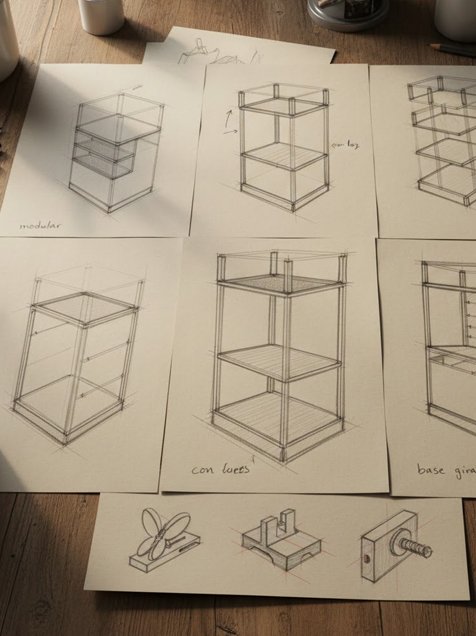
2. Architecture alternatives
Stackable modules, folding parts, removable joints and fixed structures are compared. Each option changes stability, part count, machining, packaging and assembly.
3. Material and process
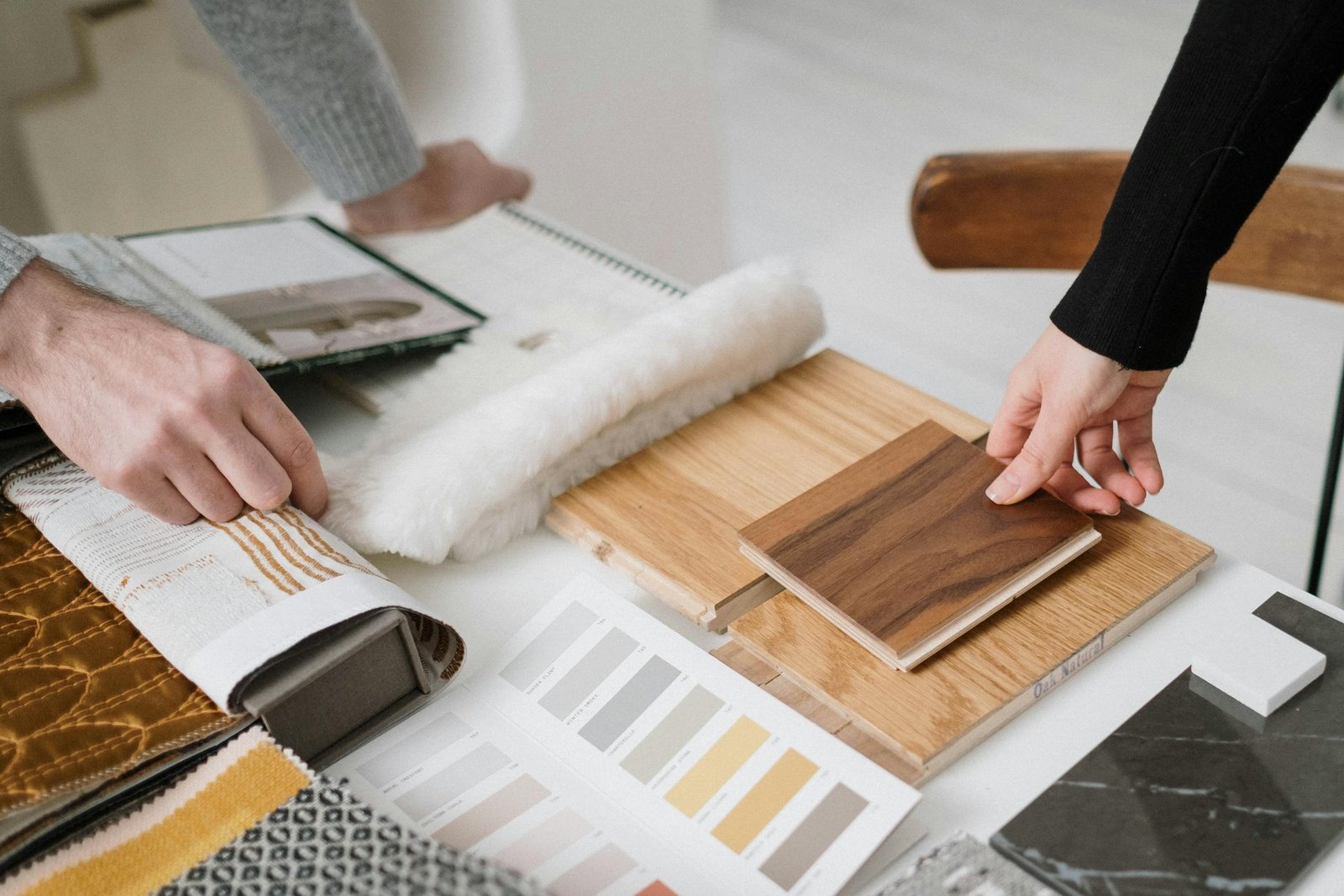
Board type and thickness are selected together with the joint system. Internal radii, orientation, holding and sheet yield must respond to the actual tool and supplier.
4. Prototype
A volumetric model can first check scale and ergonomics. A functional module can then reveal joint behaviour, deflection, assembly sequence and maintenance requirements.
Manufacturing decisions
Documentation should define material, thickness, cutting files, hardware, finishes, assembly sequence and control criteria. Universal tolerances are avoided; they must reflect material, machine and function.
Expected study outcome
The objective is not to guarantee a successful product. It is to obtain a configuration that can be quoted, prototyped and compared. Testing may indicate advancing, reinforcing, simplifying or changing the architecture.
Learning
Designing for CNC connects use, modularity and manufacturing from the start. When boards, tools, joints and assembly are considered late, unnecessary parts, waste or assembly difficulties often appear.
Design for Manufacturing · Feasibility · Product Development
Related services
The example connects with Órbita’s design for manufacturing approach and our global design, local manufacturing model for coordinating materials, joinery, quantities and workshop documentation.