EDUCATIONAL CASE · METHODOLOGICAL EXAMPLE
Low-Volume Technical Enclosure: From Prototype to Manufacturable Definition
This example explains how to develop an electronic equipment enclosure when the initial quantity does not justify injection tooling. It is not a client project and does not claim real commercial results.
The problem
The equipment must protect components, support ventilation, simplify maintenance and present a clear interface. The first series is limited and may change after testing.
Constraints
- Board and connector dimensions.
- Temperature and airflow.
- Assembly and repair access.
- Required resistance for the intended use.
- Quantity, investment and available suppliers.
How the study would work
1. Requirements
Interfaces, access zones, fixings, loads, environment, cleaning and maintenance are recorded. Open decisions are identified instead of being hidden inside the model.
2. Alternatives
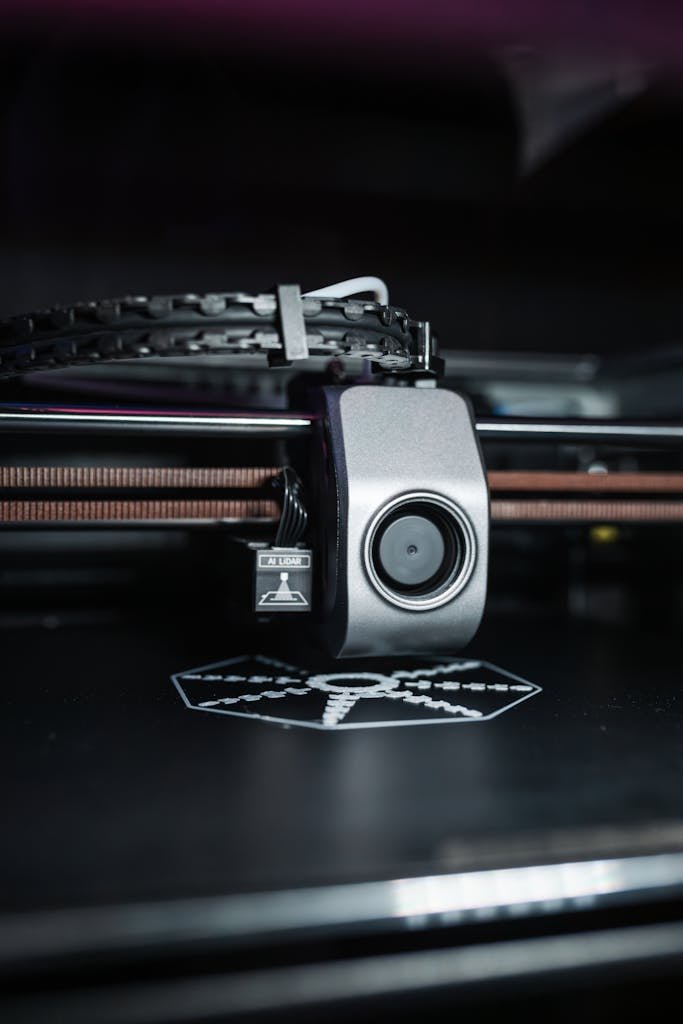
3D printing, CNC machining, folded sheet and hybrid solutions using standard components are compared. Each route changes geometry, finish, initial investment and repeatability.
3. Prototype
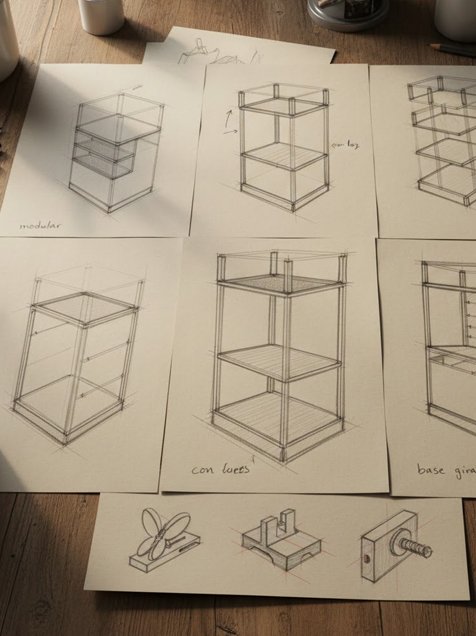
A first model verifies volume, connectors and assembly. A functional iteration adds ventilation, closures, internal supports and defined use conditions.
4. Evaluation
Tests document interference, temperature, assembly time, component access and joint behaviour. A prototype does not guarantee production; it creates evidence for adjustment.
Manufacturing preparation
Documentation may include 3D models, drawings, materials, components, inserts, fixings, finishes and assembly sequence. Tolerances are agreed according to process, material, function and supplier.
Expected outcome
The study should support quotation and an initial series while keeping validation-dependent changes open. If quantity increases, the architecture may be adapted to another process.
Learning
The best low-volume route is not always a reduced version of mass production. Processes that support learning, correction and documentation can be more appropriate before committing to expensive tooling.
Product Development · Prototyping · Design for Manufacturing
Related next steps
This educational case connects with design for manufacturing and product design and prototyping. These pages explain how geometry, materials, assembly and testing can be evaluated before defining a production route.