What to Decide Before Modelling a Product in 3D
Technical decisions become useful when they are connected to requirements, evidence and the intended manufacturing context.
The problem
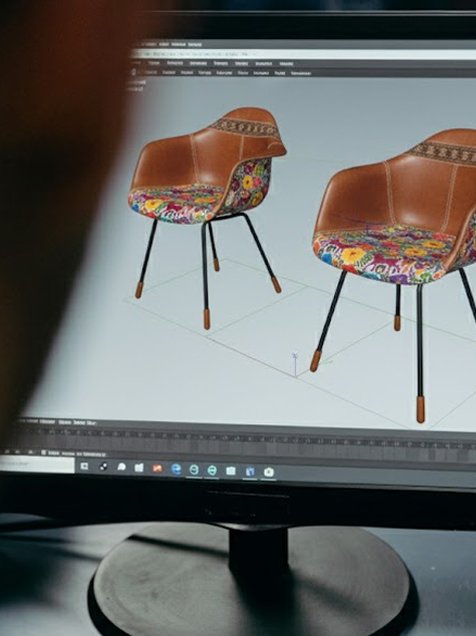
Detailed 3D modelling can make an unresolved concept look finished. If architecture, interfaces or process assumptions are still unclear, later changes become harder to manage.
Context and analysis
Before detailed CAD, clarify the use sequence, main volumes, functional architecture, critical interfaces, access, assembly logic, likely materials, process families, quantities and the questions a prototype must answer.
Questions to resolve
- What requirement or risk drives the decision?
- Which variables must be represented?
- What evidence is sufficient for the next stage?
- Which assumptions remain open?
Alternatives
Compare more than one route whenever the decision affects architecture, process or investment. A lower-detail test, standard component or staged launch may provide better evidence before committing to a final configuration.
How Órbita approaches it
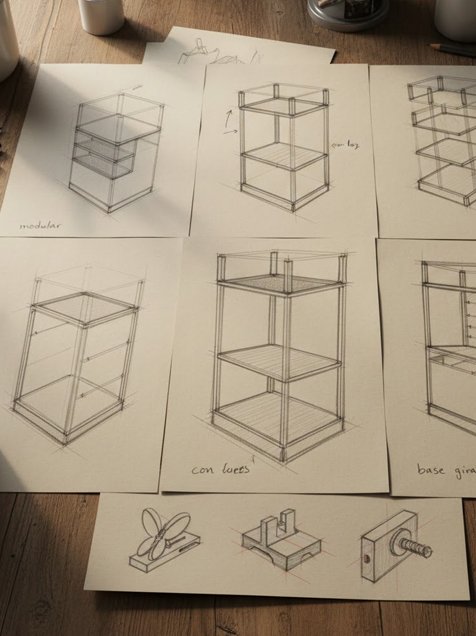
Sketch alternatives, use simple volume models, review interfaces, select the level of detail required for the next decision, document assumptions and delay cosmetic detail that does not yet reduce risk.
Educational example
Educational example, not a client case. For a countertop appliance, volume studies reveal a conflict between refill access and the electronic module. Resolving the internal layout first prevents premature work on surface detail and prepares a focused ergonomic mock-up.
Result of the analysis
The result is a documented decision and a clearer next step. Depending on the evidence, that step may be to advance, modify, simplify, divide the project into stages, change process or discard an alternative.
FAQ
Does this analysis guarantee manufacturing success?
No. It reduces uncertainty for a defined decision; later stages still require appropriate tests, supplier validation and documentation.
When should suppliers participate?
When process capability, quantities, tooling, lead time or components materially affect the decision.
Explore Product Development, Product Feasibility, Prototyping and Design for Manufacturing.