When to Modify, Simplify or Discard a Product Solution
Technical decisions become useful when they are connected to requirements, evidence and the intended manufacturing context.
The problem
Continuing with the first concept can consume time and investment even when evidence shows that its complexity is not justified. Stopping or changing direction can be a valid design outcome.
Context and analysis
A solution should be reviewed when it fails a critical requirement, depends on fragile supply, creates excessive assembly, demands disproportionate investment or introduces risk that cannot be tested responsibly. Not every issue requires abandoning the project.
Questions to resolve
- What requirement or risk drives the decision?
- Which variables must be represented?
- What evidence is sufficient for the next stage?
- Which assumptions remain open?
Alternatives
Compare more than one route whenever the decision affects architecture, process or investment. A lower-detail test, standard component or staged launch may provide better evidence before committing to a final configuration.
How Órbita approaches it
Separate essential from optional requirements, locate the source of complexity, compare redesign and process changes, stage the investment, test the highest-risk assumption and define a decision gate.

Educational example
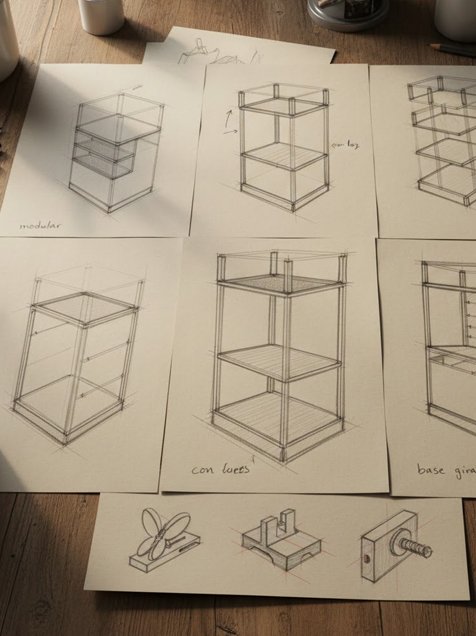
Educational example, not a client case. A portable mechanism begins with six custom parts. The study shows that two functions can use standard components and one adjustment is unnecessary. The simplified architecture reduces the number of unknowns and creates a clearer prototype plan without claiming guaranteed savings.
Result of the analysis
The result is a documented decision and a clearer next step. Depending on the evidence, that step may be to advance, modify, simplify, divide the project into stages, change process or discard an alternative.
FAQ
Does this analysis guarantee manufacturing success?
No. It reduces uncertainty for a defined decision; later stages still require appropriate tests, supplier validation and documentation.
When should suppliers participate?
When process capability, quantities, tooling, lead time or components materially affect the decision.
Explore Product Development, Product Feasibility, Prototyping and Design for Manufacturing.